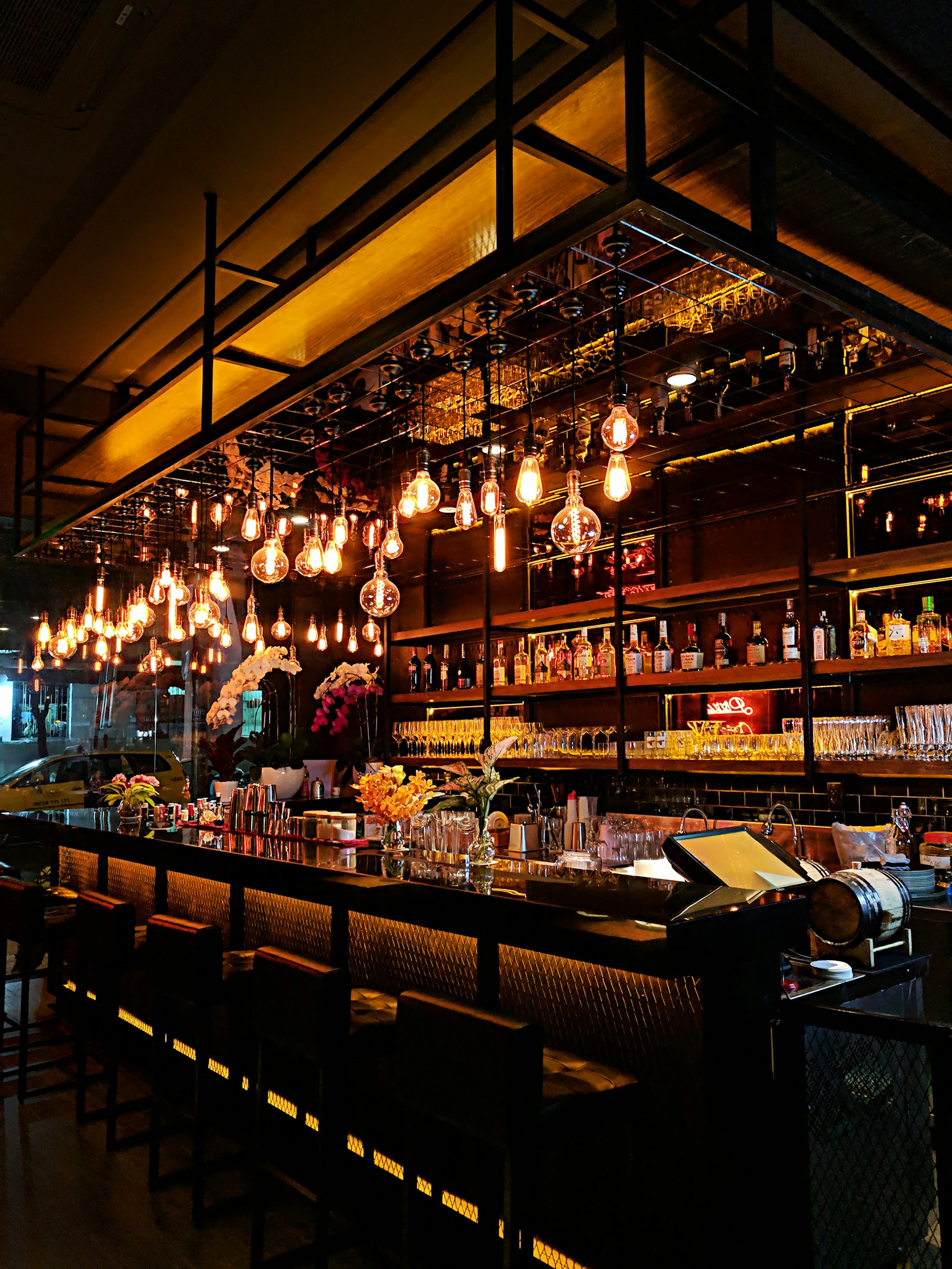
Harry's New York Bar
Harry's is a time capsule, and the time it keeps is 1911. An American jockey named Tod Sloan had a Manhattan bar dismantled plank by plank, shipped across the Atlantic, and reassembled on Rue Daunou — a mahogany counter already polished by New York elbows before it ever reached Paris. He hired a Scottish bartender, Harry MacElhone, whose name the place eventually took, and over the following decades that bar invented or popularized half your cocktail menu: the Bloody Mary, the Sidecar, the French 75, the White Lady.
Hemingway and Fitzgerald drank here; Gershwin is said to have composed An American in Paris in the piano bar downstairs. It is still family-run, still white-coated, still gloriously unbothered by trend. Few bars on earth carry this much history this lightly.
A historic cocktail bar near the Opéra — dark mahogany, red leather, faded American college pennants on the walls, a downstairs piano bar. White-jacketed bartenders, a 400-deep classic-cocktail repertoire, and a no-shorts dress code that tells you the era it belongs to.
Hemingway and Fitzgerald drank here; Gershwin is said to have composed An American in Paris in the piano bar downstairs. It is still family-run, still white-coated, still gloriously unbothered by trend. Few bars on earth carry this much history this lightly.
Harry's is the rare living monument that still pours a drink as well as it tells the story. 5 Rue Daunou, in the afternoon, with a French 75. That's the visit.
Order a classic that was born here — the Bloody Mary or the French 75 — and have it in the afternoon when the room is quiet and the bartenders have time to talk.
There's a famous American-customer straw poll held every election year since 1924 with an uncanny track record.
Dress the part; shorts won't get you in.